
Injection Molding DFM Guidelines for Production-Ready Parts
Design for Manufacturing is the bridge between a 3D model and a functional, cost-effective plastic part. Apply practical DFM principles early to prevent costly mold modifications, reduce cycle times, and improve part consistency during mass production.
50–1,000T
Injection molding machines
1g–5kg
Part weight range
Prototype to volume
Production support
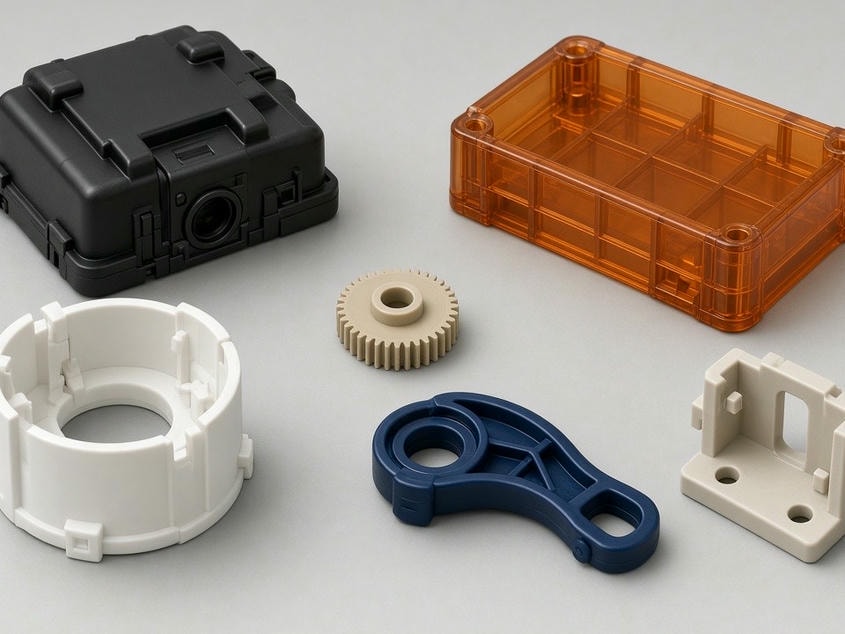
Engineering-first manufacturing
Design reviews account for material shrinkage, cooling rates, flow behavior, and ejection force before tooling begins.
Why DFM matters
Turn design intent into stable production
At PPMolding, we review hundreds of technical drawings annually. Many manufacturing delays begin when a design does not account for the physical realities of injection molding, including material shrinkage, cooling rates, and ejection force.
Our DFM process helps engineers identify production risks while changes are still inexpensive. The result is a clearer path from concept to mold, validated part quality, and a production strategy aligned with your volume and budget.
Core principles
The design decisions that influence molding success
Successful injection molding depends on controlling how molten plastic flows, fills, cools, and releases from the steel tool.
Uniform wall thickness
Consistent walls cool more evenly and reduce internal stress, sink marks, warping, and dimensional instability. Where a thick section is necessary, consider coring it out.
Draft angles
Plastic parts shrink as they cool and can grip the mold core. A typical draft range of 0.5° to 2°, depending on surface finish, supports smooth ejection and reduces scuffing.
Radii and fillets
Sharp corners create stress concentrations and restrict material flow. Internal radii strengthen the part while improving the structural integrity of the mold cavity.
Ribs and bosses
Ribs add rigidity without adding bulk. Keep rib thickness at approximately 50%–60% of nominal wall thickness to reduce visible sink marks on the opposite surface, and use gussets to support bosses.
Design review tool
Injection molding DFM checklist
Use these checkpoints before finalizing CAD files, drawings, and tooling decisions.
| Design feature | DFM goal | Risk of ignoring |
|---|---|---|
| Wall thickness | Maintain uniform thickness and core out heavy sections. | Sink marks, warping, internal stress, incomplete fill. |
| Draft angles | Provide approximately 0.5° to 2° minimum, based on finish and geometry. | Part stuck in mold, drag marks, and surface damage. |
| Radii and fillets | Avoid sharp internal corners and support smooth flow. | Stress concentrations, flow restriction, and mold cracking. |
| Rib thickness | Keep ribs below approximately 60% of nominal wall thickness. | Sink marks on visible surfaces and difficult filling. |
| Bosses and hole locations | Use gussets, maintain adequate surrounding material, and review core pins for ejection and filling. | Weak attachments, distortion, blocked holes, or ejection issues. |
| Shrinkage risk | Account for resin shrinkage, cooling behavior, and dimensional tolerances. | Dimensional instability, warping, and tolerance failures. |
| Undercuts | Avoid where possible, or plan lifters and sliders. | Increased mold cost, complexity, and maintenance. |
| Gate location | Balance flow paths and place gates with cosmetic and structural requirements in mind. | Cosmetic defects, weld lines, trapped air, and uneven filling. |
From RFQ to production
How PPMolding integrates DFM into your project
We analyze your design files against material requirements, production volumes, tooling budgets, and the realities of the molding process.
Feasibility analysis
Identify thin walls, deep ribs, complex undercuts, and other issues that may hinder production.
Mold configuration strategy
Select the appropriate prototype, bridge, high-cavitation, or hot-runner tooling strategy for your volume and budget.
Material optimization
Recommend material grades that balance mechanical properties, cost, dimensional behavior, and moldability.
Tooling design
Develop the mold base, cooling channels, and ejection system for quality parts and efficient cycle times.
Material strategy
Resin selection changes the DFM approach
Different resins have different shrinkage rates, flow characteristics, temperature requirements, and tolerance behavior. Material selection should be considered alongside geometry and production volume.
Engineering plastics
PA, POM, and PBT often require tighter tolerance planning and specific draft angles to accommodate crystalline structure and shrinkage behavior.
High-temperature resins
PEEK and PPS demand robust mold materials such as H13 or S136 steel and precise temperature control for dimensional stability.
Flexible materials
TPE and TPU require careful planning for overmolding and bonding to rigid substrates to support long-term adhesion and performance.
Our facility works with a wide range of thermoplastic materials, including custom color matching and additive capabilities for application-specific requirements.
Manufacturing capabilities
A complete path from prototype to volume production
PPMolding provides a full-service manufacturing environment for rapid prototyping, medium-volume production, and high-volume mass production.
Injection molding: 50 to 1,000 tons, producing parts from 1g to 5kg.
Mold making: Prototype, bridge, and production molds manufactured in-house using P20, 718, H13, S136, and NAK80 steels.
Secondary operations: CNC machining, pad printing, laser marking, ultrasonic welding, and final assembly.
Advanced molding techniques
Insert molding
Integrate metal components, threaded inserts, or terminals during the molding process.
Overmolding
Create multi-material parts for ergonomic grips, seals, or shock absorption.
Family and multi-cavity molds
Optimize cycle times and output for high-volume manufacturing requirements.
Industry experience
Built for demanding applications
Automotive
Interior components, clips, and structural brackets.
Electronics
Housings, connectors, and protective covers.
Medical & healthcare
Precision housings and equipment components.
Robotics
Durable structural parts and protective enclosures.
Industrial equipment
Heavy-duty guards, knobs, and machine components.
Common questions
Get clarity before tooling starts
Our engineering review connects part geometry, resin behavior, mold configuration, and production objectives.
Start your manufacturing project
Get a practical DFM review for your next part
Send your project requirements and our engineering team will review your files, provide DFM recommendations, and outline a production timeline.
Please include
- 3D CAD files: STEP, STP, or X_T preferred
- 2D drawings with tolerance requirements
- Material specifications and color requirements
- Estimated annual production volume
Email: info@plasticpartsmolding.com
Address:
Request a proposal