
Lighting Plastic Parts Manufacturing
Custom Housings, Diffusers, and Optical Components
PPMolding manufactures custom lighting plastic parts for commercial lighting, industrial equipment, automotive applications, appliances, and consumer products.
From prototype tooling and mold development through injection molding, secondary processing, assembly, and volume production, we help lighting teams develop reliable, appearance-critical components.
50–1,000
Injection molding tons
1 g–5 kg
Approximate part weight
3–6 weeks
Typical mold lead time
Global
Project and production support
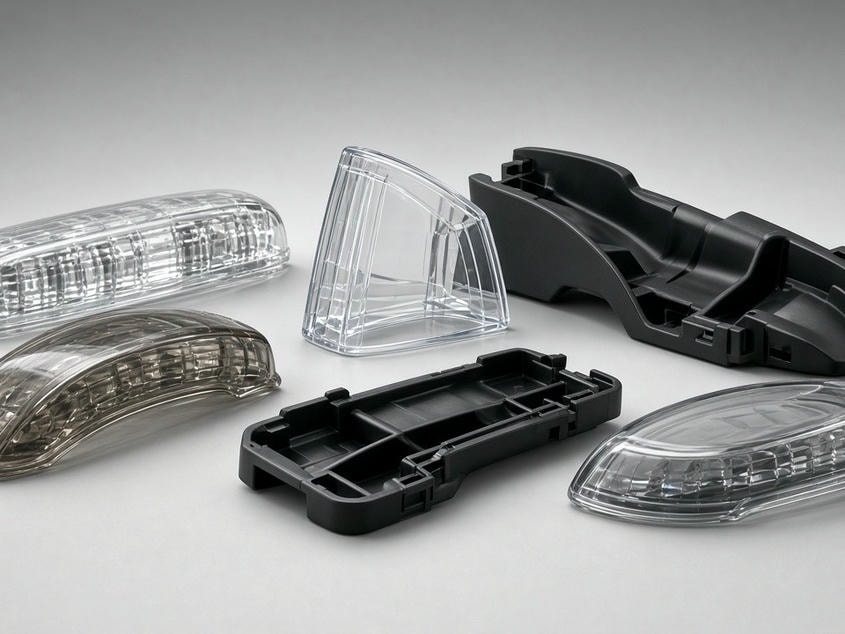
Engineered for light, heat, and appearance
Material, mold, surface, and assembly decisions reviewed before tooling begins.
Built around the lighting assembly
Plastic components for function and visible quality
Lighting parts often combine controlled light transmission, clean visible surfaces, dimensional stability, heat resistance, and reliable fit with LEDs, boards, reflectors, seals, or metal hardware.
PPMolding manufactures both visible cosmetic components and internal structural parts. The process is selected according to geometry, resin, production quantity, surface requirements, and lighting performance.
Protect and enclose
Housings and covers protect LED modules, bulbs, wiring, and internal electronics.
Control the light
Diffusers, lenses, reflectors, and light-guide structures shape transmission and distribution.
Support assembly
Brackets, clips, bosses, seals, and alignment features connect the complete product.
Create the exterior
Bezels, trim rings, windows, and enclosures provide a consistent product appearance.
Component range
Common lighting plastic parts
We support both optical and structural components across commercial, industrial, automotive, appliance, and consumer lighting products.
Optical components
- PMMA and PC lenses
- Diffusers and translucent panels
- Reflectors
- Light-guide-related structures
Housings and covers
- LED lamp housings
- Protective lamp covers
- Outdoor lighting enclosures
- Battery and control-module housings
Visible trim
- Decorative bezels
- Trim rings
- Sensor and indicator covers
- Ceiling light and downlight components
Assembly parts
- Mounting brackets and clips
- Connector covers
- Cable-management parts
- Automotive interior lighting parts
Engineering reference
Lighting plastic parts parameters
Typical considerations for molded lighting components. Final specifications depend on the design, resin grade, mold structure, optical target, and operating environment.
| Parameter | Typical options or range | Project considerations |
|---|---|---|
| Material | PMMA, PC, ABS, PC/ABS, PP, PBT, TPE/TPU, custom resin grades | Transparency, impact resistance, heat exposure, flexibility, and application |
| Light transmission | Opaque, translucent, diffused, transparent, high-transmission | LED output, wall thickness, texture, and resin grade |
| Surface treatment | SPI finish, polishing, matte or custom texture, painting, printing | Appearance, glare, haze, diffusion, and visible defects |
| Typical part size | Small precision parts to approximately 1 m-scale molded components | Projected area, wall structure, mold layout, and machine capacity |
| Part weight | Approximately 1 g–5 kg | Machine capacity and mold construction |
| Application type | LED, commercial, automotive, appliance, industrial, outdoor | Environmental conditions and assembly requirements |
| Heat requirement | Standard-temperature to elevated-temperature environments | Continuous temperature, heat sources, and ventilation |
| Dimensional tolerance | Typically ±0.05 mm; tighter control may be available | Geometry, shrinkage, resin behavior, and measurement method |
| Production volume | Prototype, low, medium, and mass production | Cavity count, automation, tooling, and cycle time |
Material engineering
Transparent appearance and heat-resistant performance
Material selection affects clarity, light transmission, impact resistance, dimensional stability, surface appearance, and service life.
For transparent and translucent parts, we review resin grade, moisture control, mold polish, gate location, weld lines, flow marks, and handling protection before production.
PMMA
Good clarity, surface appearance, and weathering performance for suitable covers, lenses, windows, and diffusers.
PC
Higher impact resistance for protective covers, industrial lighting, outdoor fixtures, and vibration-prone applications.
ABS and PC/ABS
Balanced appearance, processability, impact performance, and dimensional stability for housings and bezels.
PBT, PP, TPE/TPU
Options for heat-resistant electrical parts, lightweight structures, seals, grips, gaskets, and soft-touch features.
Process control
Injection molding designed around the part
Lighting parts can look simple while presenting demanding molding conditions. Our engineering review helps reduce tooling changes and improve production stability.
Geometry and assembly
We evaluate wall thickness, transitions, draft, ribs, bosses, clips, snap-fits, parting lines, LED or PCB clearance, sealing, and alignment features.
Reliable tool construction
Support includes prototype and bridge tooling, single- and multi-cavity molds, family molds, hot or cold runners, insert molds, overmolding tools, and export molds.
Repeatable output
Cooling, ejection, venting, shrinkage, warpage, transparent surface protection, inspection, and cycle time are reviewed against the resin and annual volume.
For clear and translucent components: gate marks, weld lines, flow marks, sink marks, air traps, haze, scratches, flash, and parting-line visibility require agreed inspection criteria and careful mold design.
Appearance and assembly
Finish the part for the product it becomes
A polished surface can support high transparency, while controlled matte or molded textures can diffuse light, reduce hotspots, and manage glare.
Secondary operations
Molded components can be supplied individually or integrated into a larger lighting assembly.
- Ultrasonic welding
- Heat staking
- Threaded inserts
- CNC machining
- Adhesive bonding
- Product assembly
- Overmolding
- Packaging
Insert molding can integrate metal pins, terminals, and threaded inserts. Overmolding can combine rigid housings with TPE or TPU for sealing, grip, vibration control, or impact protection.
Project lifecycle
Support from first sample to volume supply
Prototype and development
Validate fit between housing and cover, LED or PCB positioning, transmission, diffusion, assembly sequence, appearance, mounting interfaces, and initial material selection.
Low and medium volume
Single-cavity or lower-cavity tooling can balance tooling investment and part cost for industrial lighting, specialty equipment, automation products, and customized fixtures.
Mass production
Multi-cavity molds, optimized cycle times, automated handling, cooling, runner design, ejection, and inspection are matched to annual volume and delivery needs.
Tool steel options
P20, 718, H13, S136, NAK80, and equivalents
Project inputs
CAD files, drawings, samples, material and appearance standards
Timing
Typical mold lead time approximately 3–6 weeks
Frequently reviewed
Questions lighting teams ask
Share your operating conditions and intended use so the material and tooling approach can be assessed against the finished product.
How do I select PMMA versus PC?+
PMMA is often considered for clarity, surface appearance, and suitable weathering requirements. PC is considered when higher impact resistance, handling durability, vibration resistance, or more demanding protection is required. The exact grade should be reviewed against temperature, light stability, chemicals, and appearance.
What heat conditions should be provided?+
Provide continuous and peak temperatures, distance from the LED or bulb, ventilation, nearby metal structures, assembly stress, outdoor exposure, and contact with oils or cleaners. These details help determine a practical resin grade and design solution.
How are clear part defects evaluated?+
Inspection criteria can address black spots, flow lines, weld lines, bubbles, scratches, haze, sink marks, uneven texture, color variation, gate vestige, flash, and parting-line visibility based on viewing distance, lighting conditions, surface location, and product importance.
What information is needed for a quotation?+
Useful inputs include 3D files, 2D drawings, material or performance requirements, light-transmission targets, surface expectations, operating environment, prototype and production quantities, assembly needs, packaging, and target delivery schedule.
Request a technical review
Send your lighting part requirements
PPMolding can review the part design, tooling approach, material options, production requirements, and secondary operations needed for your lighting product.
- ✓3D files in STEP, STP, IGES, IGS, X_T, or STL format
- ✓2D drawings in DWG, DXF, or PDF format
- ✓Material, light-transmission, surface, heat, quantity, and assembly requirements
Email: info@plasticpartsmolding.com
Address: