
Crystal-clear acrylic components, engineered for performance.
PPMolding specializes in Polymethyl Methacrylate (PMMA) injection molding for high-clarity, durable, and precision-engineered plastic components—from mold design through final assembly.
92%+
Visible light transmittance
50–1,000 t
Injection machine capacity
SPI A-1/A-2
Available cavity polish standards
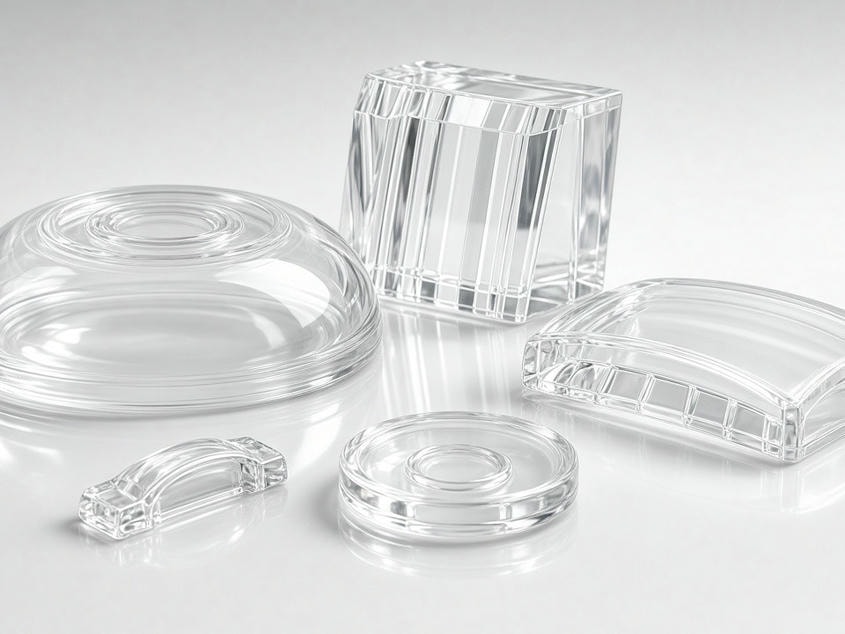
Built around optical integrity
Controlled drying, polished tooling, clean production, and optimized flow help protect clarity from mold to finished part.
Material intelligence
Why PMMA demands process control
PMMA is an amorphous thermoplastic valued for exceptional optical clarity, surface hardness, and UV resistance. Unlike commodity plastics, acrylic requires tightly controlled injection parameters to prevent internal stress, cloudiness, and surface defects.
The production priority
Preserve the glass-like appearance while maintaining dimensional stability and long-term resistance to environmental exposure.
| Property | Typical characteristic |
|---|---|
| Light transmittance | >92% visible light |
| Hardness | M-Scale 90–100; high scratch resistance |
| Refractive index | 1.49 |
| Weatherability | Excellent UV and environmental stability |
| Thermal deflection | Approx. 90°C–105°C |
| Primary use cases | Lenses, light pipes, transparent housings, displays |
Manufacturing capabilities
Designed for clarity, stability, and repeatability
Our team manages the complete manufacturing cycle with process decisions tailored to the technical demands of acrylic molding.
Custom mold design
Tooling is designed around PMMA shrinkage rates of typically 0.2% to 0.8% and its flow characteristics.
High-precision tooling
P20, 718, or S136 steels can be polished to SPI A-1 or A-2 standards for a mirror-like cavity finish.
Controlled machine capacity
Machines from 50 to 1,000 tons are calibrated to maintain precise melt temperatures and reduce yellowing.
Venting and flow control
Proper venting helps prevent gas burns and trapped air that can compromise transparent part appearance.
Stress management
Holding pressure and cooling cycles are optimized to reduce residual stress, cracking, and crazing over time.
Production-ready support
From design review to final assembly, one integrated workflow keeps optical and dimensional requirements aligned.
Optical quality controls
Protecting the glass-like finish
PPMolding applies focused controls at the points where transparent acrylic parts are most vulnerable to defects.
Strict material handling
Industrial drying equipment removes moisture from hygroscopic PMMA to prevent splay and internal bubbles.
Polished tooling
Advanced cavity polishing delivers the surface roughness required for optical performance.
Clean production areas
Controlled production areas help prevent dust and particulate contamination visible in clear parts.
Gate location optimization
Part geometry is reviewed to keep gates away from optical paths and minimize visible flow lines.
A complete finishing workflow
From molded component to finished assembly
- Precision CNC machiningFor features that cannot be molded directly or require tighter tolerances.
- AssemblyTransparent housings can be combined with internal components using ultrasonic welding or heat staking.
- PrintingPad printing or laser marking for logos, labels, and technical specifications.
- Protective coatingAnti-scratch or anti-glare treatments for demanding applications.
Application coverage
Built for products where transparency matters
Lighting
Light guides, lenses, and diffusers for LED fixtures and automotive lamps.
Medical equipment
Transparent housings, diagnostic equipment covers, and fluid handling parts.
Consumer electronics
Touch screens, display bezels, and indicator light covers.
Industrial instruments
Sight glasses, gauge covers, and durable transparent housings.
Project workflow
A direct path from 3D model to production
Share your requirements and our engineers will help resolve moldability, optical, and production considerations before tooling begins.
- 01
Review
Send STEP, STP, or IGS files and 2D drawings for review of draft, wall thickness, and gates.
- 02
DFM analysis
Receive feedback to improve moldability and control production costs.
- 03
Tooling
Molds are built for your volume, from prototype steel to high-production hardened steel.
- 04
T1 samples
Initial samples are checked for dimensional accuracy and optical clarity.
- 05
Production
Approved parts move into full-scale production with rigorous quality checks.
Start your project
Get a quote for your PMMA project
Tell us about your material specifications, quantity, and design files. Our engineering team can provide a manufacturing proposal and technical support for your finished component.
PPMolding
info@plasticpartsmolding.com
Share your requirements
Include drawings, expected volume, finish requirements, and target application where available.