
Precision Injection Molding
Precision Injection Molding for Electronic Components and Enclosures
PPMolding provides custom plastic injection molding services specifically engineered for the electronics industry. We translate complex 3D designs into production-ready plastic housings, internal structural frames, and precision connectors that meet strict dimensional, aesthetic, and assembly requirements.
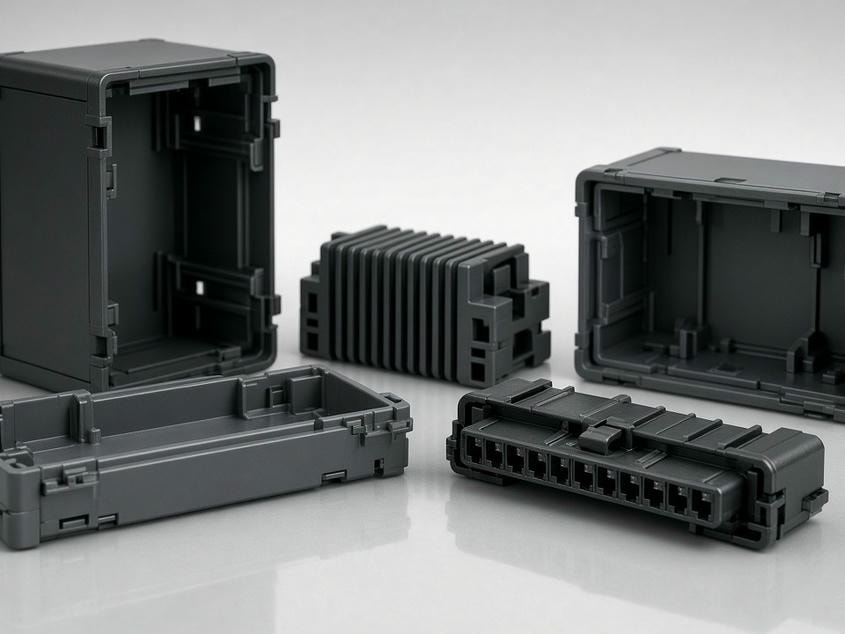
Manufacturing Capabilities for Electronic Hardware
Electronic devices demand high-performance materials and precise molding tolerances. We support the entire development lifecycle, from initial prototype iterations to full-scale mass production.
Precision Tooling
We build single-cavity prototype molds and multi-cavity production tools with P20, 718, H13, and NAK80 steels to ensure long-term dimensional stability.
Tight Tolerance Molding
We maintain standard tolerances of ±0.05 mm, with the ability to achieve tighter specifications for critical snap-fit features and interface components.
Secondary Processing
Beyond molding, we offer ultrasonic welding for housing assembly, heat staking for PCB mounting, and precision drilling or CNC machining for port modifications.
Surface Finishing
We deliver specific SPI finishes, ranging from high-gloss optical surfaces to technical textures that hide sink marks and provide a professional tactile feel.
Technical Specifications for Electronic Parts
The table below summarizes typical parameters we work with for electronic plastic components.
| Feature | Specification Range |
|---|---|
| Common Materials | ABS, PC, PC/ABS, PBT, PPS, PEEK |
| Typical Tolerances | ±0.05 mm (Design dependent) |
| Part Weight | 1 g – 5 kg |
| Surface Finishes | SPI A-1 to C-3, Mold-tech textures, Matte, Polished |
| Assembly Operations | Ultrasonic welding, heat staking, threaded inserts |
| Volume Support | Prototype, bridge tooling, medium and mass production |
Engineering Support for Electronic Designs
Successful electronic product manufacturing requires early-stage DFM (Design for Manufacturing) review. Our engineering team analyzes your CAD files to optimize:
Wall Thickness
Ensuring uniform thickness to prevent warping and sink marks on visible exterior surfaces.
Draft Angles
Balancing aesthetic requirements with the need for clean ejection from the mold.
Ribs and Bosses
Designing structural supports that provide rigidity without causing cosmetic defects on the opposite side.
Gate Location
Strategically placing injection points to hide vestige and ensure consistent material flow into complex geometries.
Material Selection for Electronics
We work with high-performance engineering resins designed to meet the electrical, thermal, and mechanical demands of your devices:
PC/ABS
The industry standard for electronic housings, offering high impact strength and excellent heat resistance.
PC (Polycarbonate)
Ideal for transparent covers, light pipes, and high-impact structural components.
PBT
Excellent electrical insulation properties and dimensional stability for connectors and switches.
PPS/PEEK
Specified for high-temperature applications where mechanical integrity under heat is mandatory.
Specialized Molding Techniques
Electronics often require complex part integration beyond standard molding. PPMolding provides:
Insert Molding
We integrate threaded metal inserts, conductive pins, and terminal blocks directly into the plastic body during the molding cycle, reducing post-processing costs and improving assembly strength.
Overmolding
We combine rigid housings with TPE/TPU materials to create soft-touch grips, environmental seals, or shock-absorbing gaskets for handheld devices.
Quality Control and Production Reliability
We implement rigorous inspection protocols to ensure that every batch of parts meets your technical documentation. Our process includes:
First Article Inspection (FAI)
Verifying critical dimensions against 2D drawings before full production.
Process Monitoring
Controlling injection pressure, temperature, and cycle time to ensure consistency across every shot.
Visual Inspection
Checking for surface defects, flash, or flow lines that could compromise the appearance of your electronic device.
Streamlined Project Workflow
We simplify the transition from design to delivery:
RFQ Review
Send your 3D files (STEP, STP, X_T) and 2D drawings to our team.
DFM Feedback
We provide an engineering assessment highlighting potential molding risks and cost-saving opportunities.
Tooling Development
Once approved, we begin mold construction tailored to your expected production volume.
Sample Validation
We produce initial samples for your team to test fit, form, and function.
Production and Delivery
Upon sample approval, we move directly into production and secondary processing.
Request a Manufacturing Proposal
If you are developing a new electronic product or require a reliable alternative supplier for existing components, we are ready to assist. Send your project requirements, including 3D models and estimated annual volumes, to our engineering team.
Email: info@plasticpartsmolding.com
Address:
We provide prompt, technical feedback on all RFQs to help you move your project into production without unnecessary delays.